
Types of Sushi — A Complete Guide to Every Variety
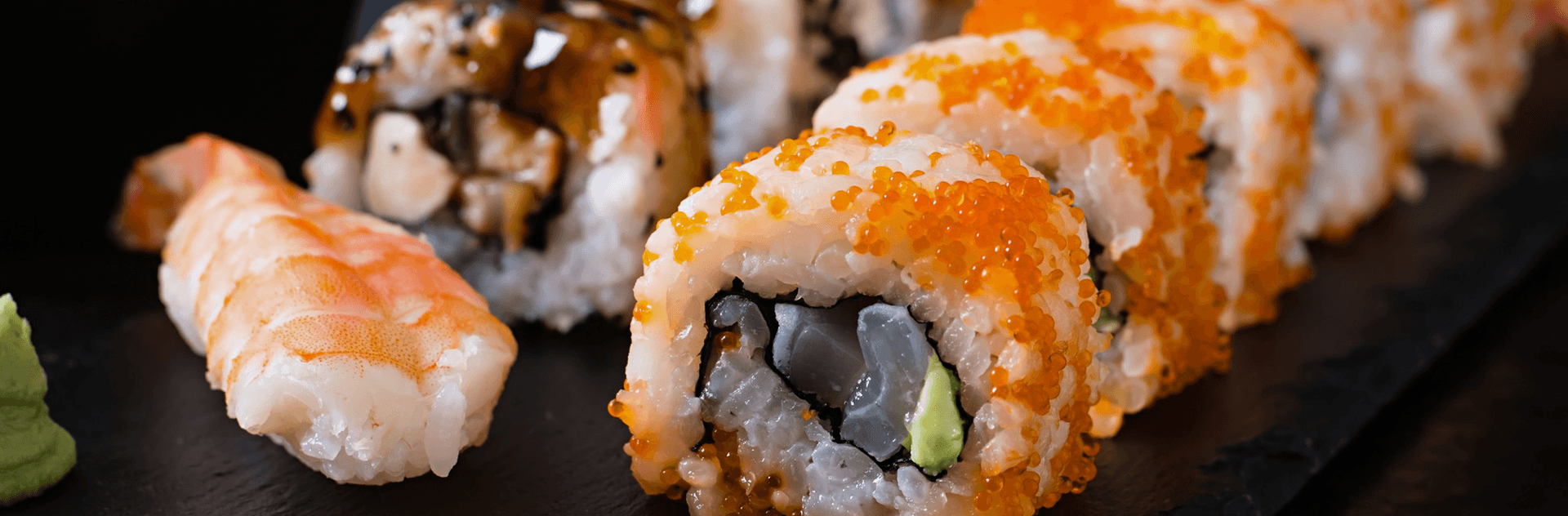
Sushi food is a Japanese culinary tradition built around vinegared rice, not raw fish alone. From hand-pressed nigiri to inside-out uramaki, each type offers a distinct texture, flavor, and eating experience. This guide covers every major variety, their ingredients, and how to tell them apart. For fresh rolls and authentic Japanese cuisine on the Costa Blanca, Kaifu Sushi serves Benidorm, Alicante, and Torrevieja.
Set sushi — Understanding sushi platters and combinations
These combinations are designed to offer a balanced tasting experience, typically including a mix of nigiri, maki, and sometimes sashimi or gunkan. In Japan, a standard set might feature tuna, salmon, shrimp, and egg nigiri alongside a few hosomaki rolls. Ordering a set is an excellent choice for beginners who want to sample types of sushi rolls without committing to a full portion of a single variety. It also provides better value compared to ordering individual pieces. When visiting a sushi restaurant for the first time, asking for the chef's recommended set is a reliable way to experience the house specialties.
Types of sushi names — What each variety is called
Knowing the types of sushi makes ordering much easier, especially when facing an extensive menu. Each name originates from Japanese and describes either the shape, technique, or ingredients of the preparation.
"Sushi etymologically is 'su' (vinegar) and 'shi' (rice). When describing a type of sushi, the surname comes first and the 's' changes to 'z': makizushi, nigirizushi, oshizushi." — Koketo.es, Japanese Gastronomy Guide
Sushi ingredients — What goes inside each roll
While vinegared rice (shari) is the universal base, the fillings and toppings vary enormously. Common ingredient categories include:
- Raw fish: Salmon (sake), tuna (maguro), yellowtail (hamachi), sea bass
- Cooked fish: Eel (unagi), mackerel (saba), shrimp (ebi)
- Seafood: Squid (ika), octopus (tako), scallops
- Roe: Salmon roe (ikura), flying fish roe (tobiko), capelin roe (masago)
- Vegetables: Cucumber, avocado, carrot, spinach, shiitake mushroom
- Other: Tamagoyaki (sweet omelet), cream cheese, tofu pouch (aburaage)
The sushi nori (dried seaweed sheet) is another essential component. In traditional maki, it wraps the exterior. In uramaki, it hides inside beneath the rice layer. Some nigiri varieties use a thin nori strip to secure toppings that would otherwise slide off, such as octopus or roe. Quality determines everything in sushi. Fish must be fresh — ideally sashimi-grade — and rice must be seasoned precisely with rice vinegar, sugar, and salt while still warm.
Baked sushi — Warm, melted, and unconventional
The most common form is aburi nigiri, where a blowtorch lightly sears the fish surface, creating a caramelized crust while leaving the interior cool and raw. Salmon aburi and tuna aburi are popular examples. Beyond torch-seared toppings, fully baked rolls have gained traction. Tempura sushi — rolls containing battered and deep-fried shrimp or vegetables — offers another warm, crunchy alternative:
- Baked Salmon Roll: Topped with a mixture of salmon, mayonnaise, and tobiko, then baked until golden
- Volcano Roll: A baked topping of seafood and spicy sauce over a California roll base
- Dynamite Roll: Baked scallops or mixed seafood with creamy sauce on top
These warm preparations appeal to diners who prefer cooked seafood or enjoy the contrast between hot topping and cool rice. For those on the Costa Blanca seeking both traditional and contemporary preparations, Kaifu Sushi has locations in Benidorm, Alicante, and Torrevieja with baked and aburi-style varieties on the menu.
Sushi store — What to look for when buying sushi
Not all establishments maintain the same standards of freshness, hygiene, and authenticity. Key factors to evaluate:
The rice should be prepared in small batches throughout the day rather than left sitting for hours. Wasabi should be fresh-grated root when possible, not just the green paste from a tube. For takeaway or delivery, packaging matters: sushi should be transported in containers that prevent the pieces from touching or tipping, with soy sauce and ginger packed separately to avoid sogginess.
All types of sushi explained — From nigiri to chirashi
Hand-pressed perfection
Nigiri sushi is the most traditional and widely consumed form in Japan. A small mound of vinegared rice is shaped by hand and topped with a slice of raw or cooked seafood. A dab of wasabi often sits between rice and fish for adhesion and flavor. Popular nigiri varieties include sake sushi (salmon), hamachi sushi (yellowtail), and ebi sushi (cooked shrimp). The tamagoyaki nigiri — a slightly sweet Japanese omelet — is a favorite for those avoiding raw fish. Diners searching for tamago sushi on the Costa Blanca will find it on the menu at Kaifu Sushi in all three cities.
"Nigiri is the purest expression of sushi — just rice and fish, with nothing to hide behind. The quality of the ingredients speaks for itself." — attributed to Jiro Ono, master sushi chef.
The classic roll
Maki sushi is the image most people associate with sushi. Rice and fillings are spread on a sheet of nori, rolled with a bamboo mat (makisu), and cut into 6–8 bite-sized pieces. Sub-varieties include:
- Hosomaki: Thin rolls with a single filling — cucumber (kappa maki), tuna (tekka maki), or salmon
- Futomaki sushi: Thick rolls containing multiple ingredients, often colorful and festive
- Uramaki: Inside-out rolls with rice on the exterior and nori hidden inside
The inside-out innovation
Uramaki sushi flips the traditional maki structure. The rice coats the outside, while the nori wraps the fillings internally. This style originated in Los Angeles during the 1960s when chef Ichiro Mashita adapted maki for American palates wary of seaweed. Iconic uramaki rolls include the California Roll (crab, avocado, cucumber) and the Philadelphia Roll (salmon, cream cheese, cucumber). The exterior rice allows for decorative toppings like sesame seeds, tobiko, or thin fish slices.
Temaki sushi — The hand-held cone
Temaki sushi is shaped by hand into a cone of nori filled with rice, fish, and vegetables. Larger than individual maki pieces, it is eaten with the hands rather than chopsticks. Its deconstructed, casual nature makes it popular at parties and informal gatherings.
Gunkan sushi — The cup-shaped wrap
Gunkan sushi is made by wrapping a strip of nori around a rice oval to create a small cup. This open-top shape holds loose toppings like salmon roe (ikura), sea urchin (uni), or chopped fatty tuna with scallions (negitoro) — ingredients that would slide off a flat nigiri.
Frequently Asked Questions
Sushi is a Japanese dish based on vinegared rice seasoned with rice vinegar, sugar, and salt. It is paired with raw or cooked seafood, vegetables, or other toppings. Raw fish without rice is called sashimi, not sushi.
Yes, when chosen wisely. Lean fish provides protein and omega-3s. Avoid rolls with mayonnaise, cream cheese, or fried tempura for lower calories. A typical 8-piece California roll has about 226 calories.
Use chopsticks or fingers. Dip the fish side into soy sauce, not the rice. Eat nigiri in one bite. Use ginger between pieces to cleanse the palate.
Sushi originated in Japan in the 7th century as a fish preservation method. The modern form with vinegared rice and fresh fish developed in Edo (now Tokyo) around the 1820s.
Start with mild flavors: California Roll, Salmon Nigiri, or Cucumber Maki. These avoid strong fish flavors and overwhelming raw textures.

Camila Ortiz
Author, Customer Manager
Customer care expert. Writing about food, service quality, and user experiences.
 Share the article
Cart

Your cart is empty
The minimum order amount depends on the selected delivery area